Battery storage
Store electricity now. Deliver it when it is needed.
Filled and unfilled cells suggest stored energy; the drawing is symbolic, not a specific battery chemistry.
A battery energy storage system converts electrical energy into chemical energy and back again. Its power rating and energy capacity describe different limits: how fast it can deliver electricity and how much it can store.
Two ratings describe two different limits
The discharge power rating, in MW, describes how quickly a battery system can deliver electricity. Energy capacity, in MWh, describes an amount of energy. Charging and discharging limits may differ, and stored cell energy is not necessarily the same as usable AC energy delivered to the grid.
A complete installation also includes power conversion, controls, cooling, and protection. Its usable energy can differ from a headline capacity because operators keep the battery within limits that protect performance and life.
Why it matters
Batteries can move electricity use across time and respond quickly to operating needs. They return less energy than they absorb because charging and discharging involve losses.
In the field
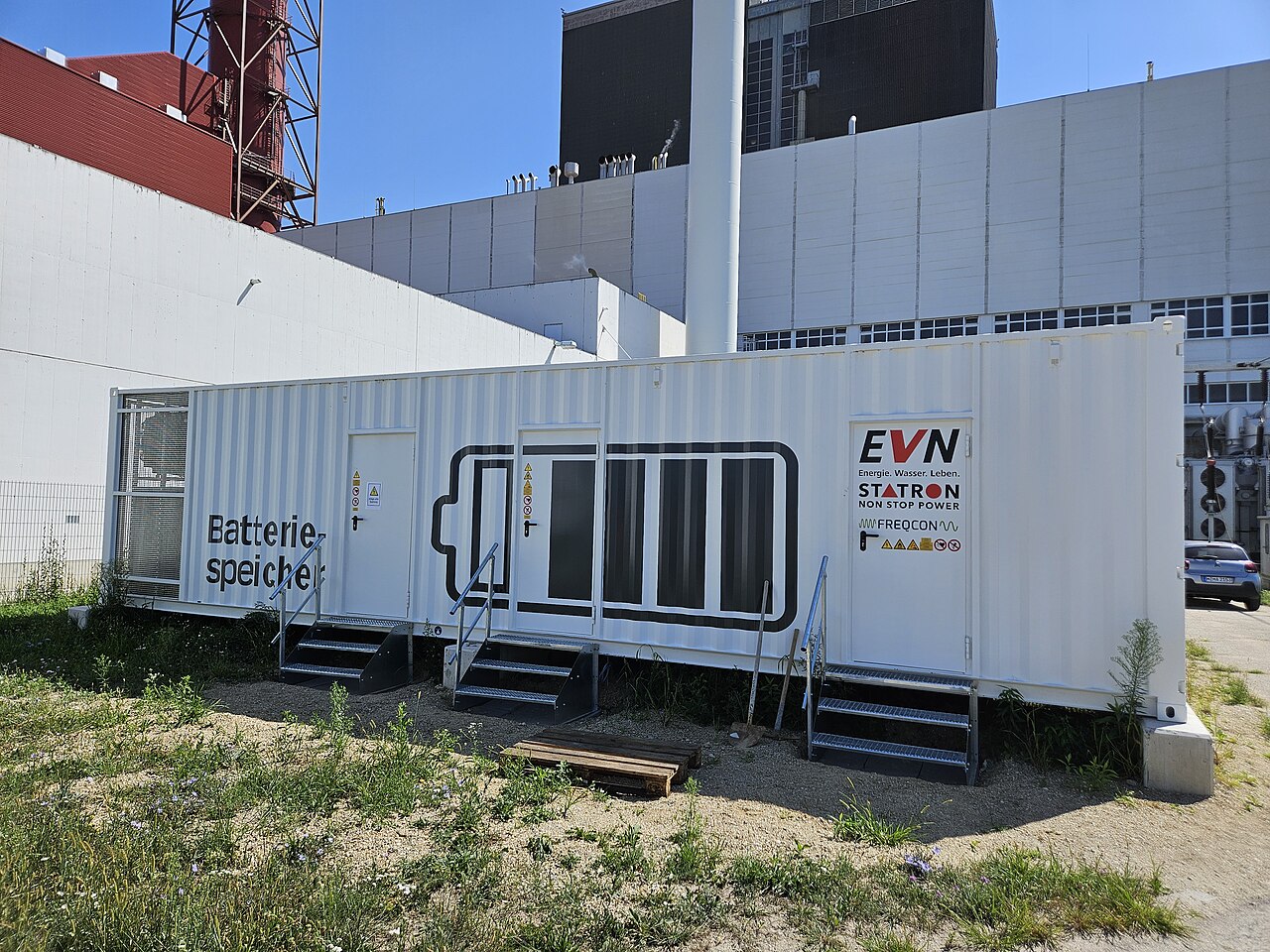
A battery energy storage installation at Theiss, Austria. A complete system includes more than cells: enclosures, cooling, controls, and power-conversion equipment also occupy the site.
Bp 95 · CC BY 4.0 (resized)