Conductor
The material that provides a path for electric current.
An overhead wire above and a separate end view below. The end view shows a simplified stranded construction.
A conductor allows electric charge to move readily. Grid conductors are commonly made with aluminum or copper; some overhead conductors include a reinforcing core for strength.
A wire can be a bundle of strands
Large overhead conductors are often built from many strands rather than one solid rod. Aluminum provides a conducting path with relatively low weight. Some designs add a steel or composite core to carry mechanical tension.
The amount of current a conductor can carry depends on heating and cooling as well as its material and size. Overhead conductors also expand as they heat, which can increase sag and affect clearance to the ground.
Why it matters
The conductor must meet both electrical and mechanical needs. Its design influences losses, capacity, weight, and the spacing of supports.
In the field
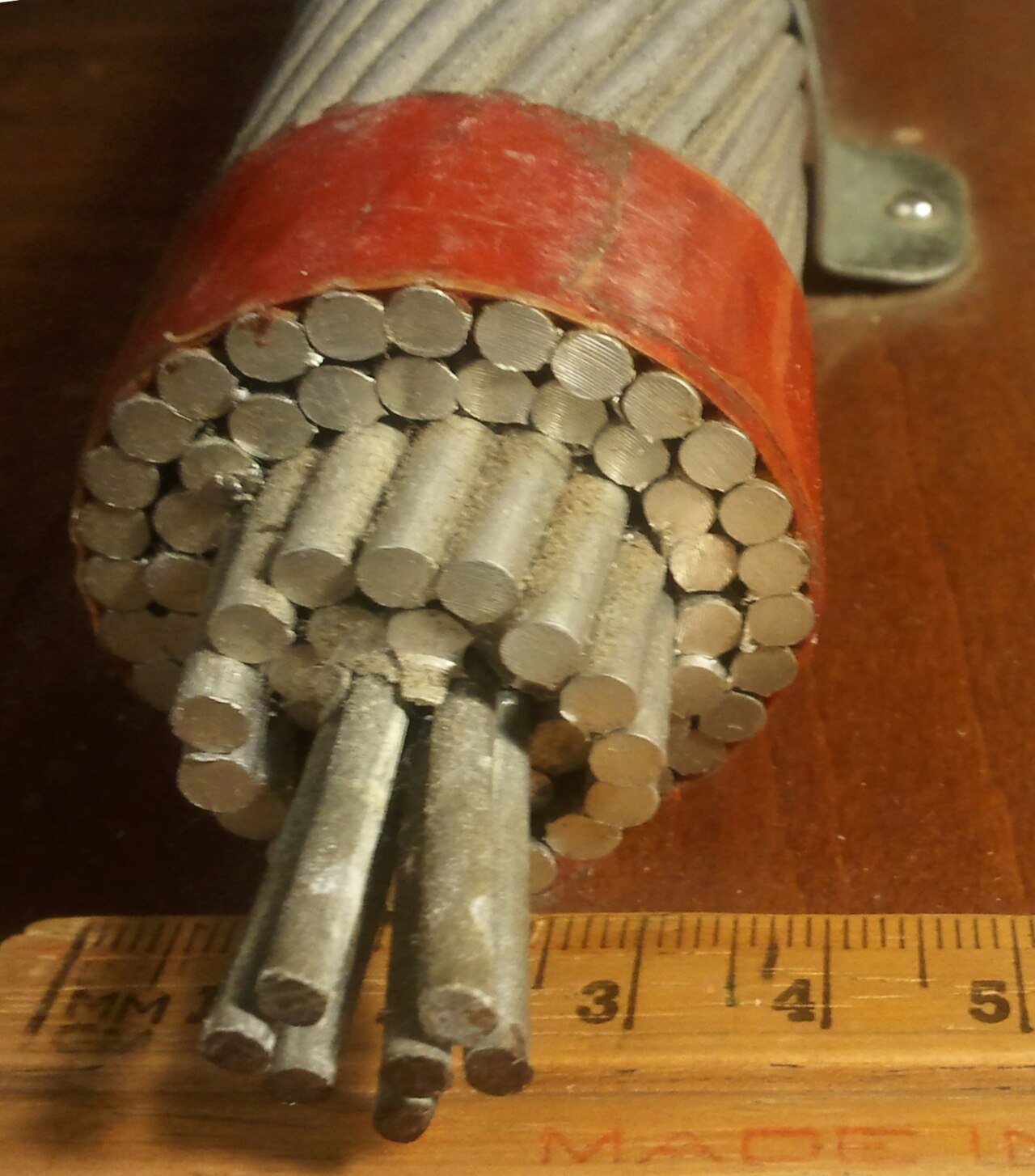
A cut end of an aluminum conductor with a reinforcing steel core, from New Zealand’s HVDC Inter-Island link. The red band is tape holding this sample together.
ClarkMills · CC BY-SA 3.0 (resized)