Pumped hydro storage
Storing energy by moving water uphill.
Upper and lower reservoirs connect through a pump/turbine. The downhill arrow shows generating flow; the uphill arrow shows pumping flow.
Pumped hydro storage uses electricity to pump water to a higher reservoir. Water later flows back through a turbine to generate electricity, returning part of the energy used to pump it.
One water route, two operating modes
In pumping mode, the facility consumes electricity to lift water from a lower reservoir to an upper one. In generating mode, water travels downhill through a turbine that drives a generator. Some designs use a reversible pump-turbine.
The energy available depends on the water volume and elevation difference, as well as conversion losses. Pumped storage returns less electricity than it consumes over a full cycle; it moves energy in time rather than supplying a new primary energy source.
Why it matters
Large reservoirs can store substantial amounts of energy, allowing electricity absorbed earlier to be delivered when it is more useful.
In the field
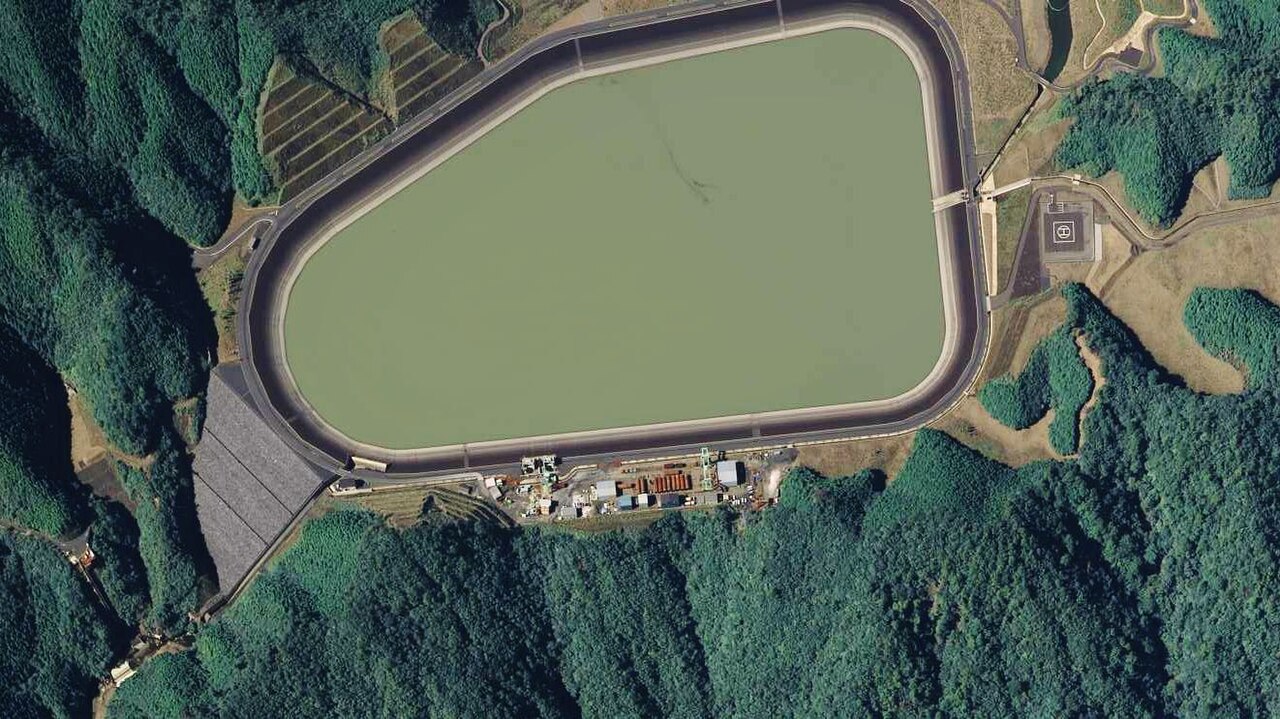
The upper reservoir at the Omarugawa pumped-storage power station in Japan. The stored energy comes from water being held above the lower reservoir.
Geospatial Information Authority of JapanRetouch: Qurren (talk) · CC BY 4.0 (resized)