Substation
Where lines connect, power is switched, and voltage can change.
An equipment sketch showing a transformer, switching equipment, and supporting gantry; it is not a wiring diagram.
A substation is a grid facility containing equipment for switching, protection, control, and often voltage transformation. Some substations connect circuits without changing their voltage.
A junction with several jobs
A substation brings electrical circuits together. Some contain transformers that connect voltage levels; others mainly switch circuits at the same voltage. Their equipment also measures conditions and isolates faults.
In an outdoor substation, the large transformer tank is only one part of the scene. Busbars, breakers, insulators, and supporting steelwork form the rest. A compact urban substation may put much of that equipment inside a building.
Why it matters
Substations provide places to connect, control, and protect the network. Their layout influences what can stay in service when a component needs maintenance.
In the field
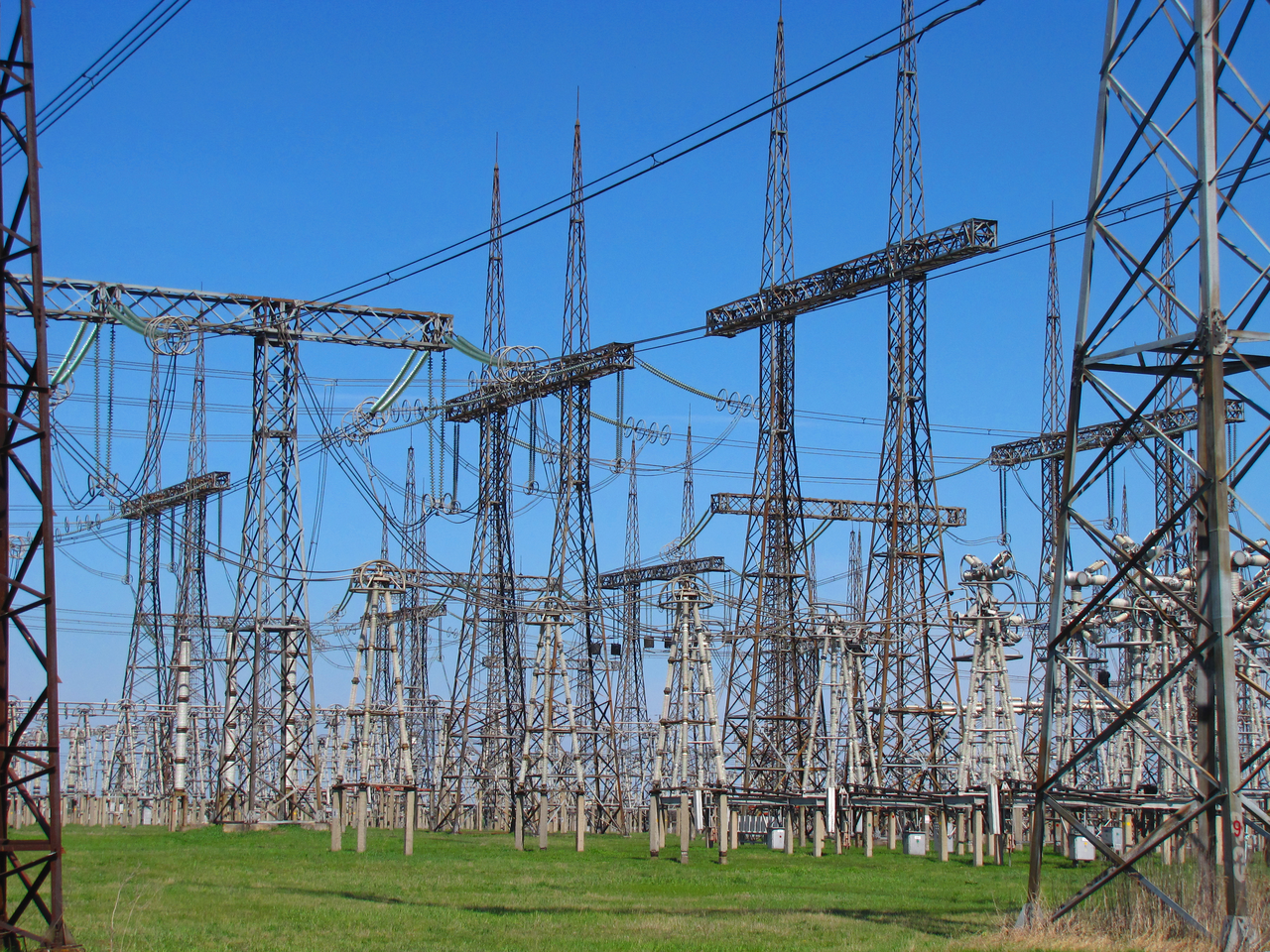
A 750 kV substation switchyard. The wide view shows the repeated bays, insulators, conductors, and supporting structures that a single equipment sketch leaves out.
Novoklimov · CC BY 4.0 (resized)