Distribution
The local network that brings electricity to your street.
A simplified overhead connection: the medium-voltage line feeds the transformer; its low-voltage service drop reaches the building’s meter. Individual phases and neutral are omitted.
Distribution networks carry electricity from substations to end users. They include medium-voltage feeders, local transformers, and the lower-voltage circuits serving homes and businesses.
From a local feeder to a building
A typical distribution network starts with medium-voltage feeders leaving a substation. Local transformers lower the voltage again for customers who need a low-voltage supply. Larger customers may connect at medium voltage and own their transformers.
On an overhead system, the service drop to a home comes from the low-voltage side of a distribution transformer. Underground systems perform the same job using cables, cabinets, and transformers that may be less visible from the street.
Why it matters
Distribution is where most customers connect. Its local equipment and capacity shape how homes, charging points, rooftop solar, and small businesses join the grid.
In the field
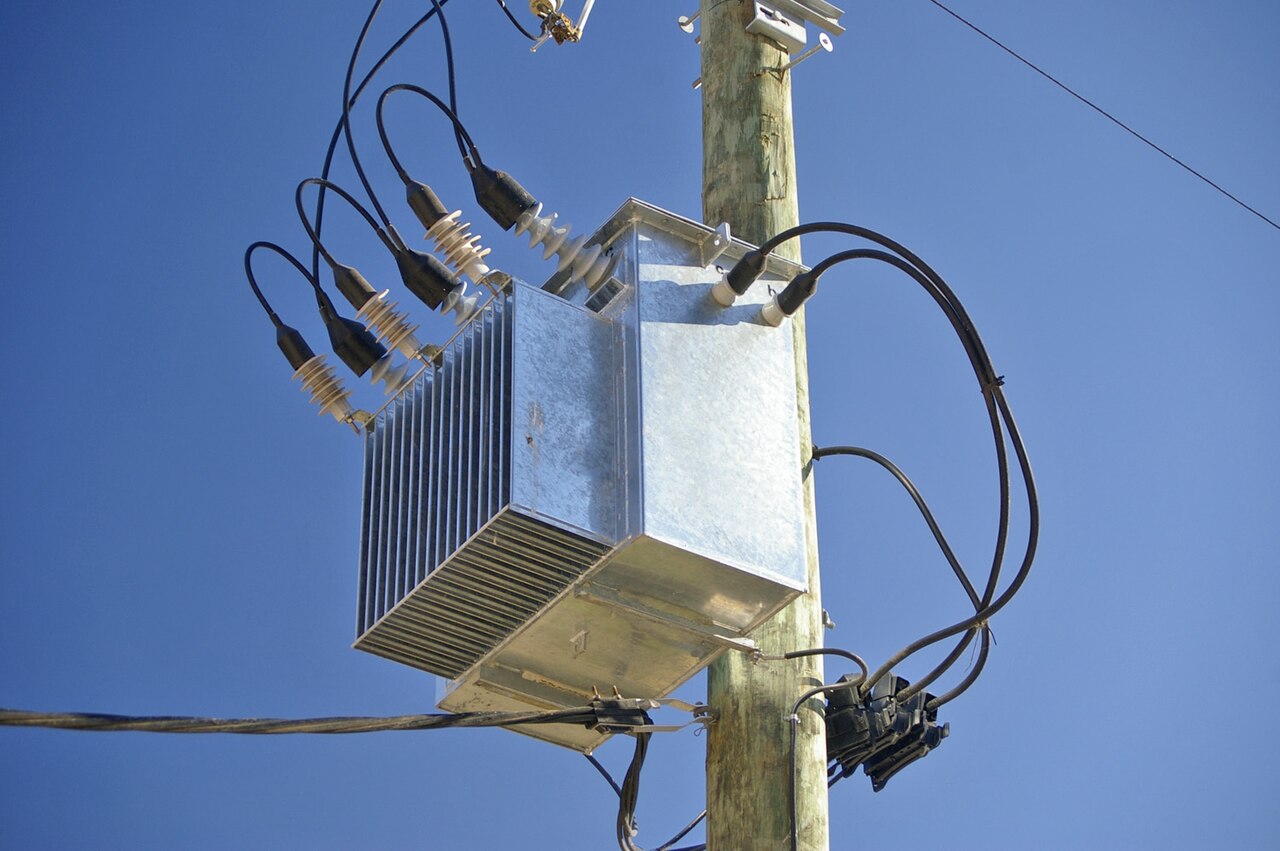
A three-phase pole-mounted distribution transformer in Australia. Designs differ by region; the transformer connects local distribution voltage to a lower-voltage supply.
Bidgee · CC BY 3.0 (resized)