Wind turbine
Capturing moving air to generate electricity.
A three-bladed horizontal-axis turbine: rotor, nacelle, and tower.
A wind turbine extracts energy from moving air using a rotor. The rotor drives a generator, and electrical equipment conditions the output for connection to the grid.
From moving air to a rotating machine
Wind flowing past the blades creates aerodynamic forces that turn the rotor. A drivetrain couples that motion to a generator. Many modern turbines use power electronics to control the electrical output before it reaches the grid.
The nacelle houses machinery near the top of the tower. Blade pitch and other controls manage operation as wind conditions change. Rated power is reached only under suitable conditions; turbines are not continuously at their maximum output.
Why it matters
Wind turbines provide electricity without burning fuel during operation, while their variable output creates planning and operating needs.
In the field
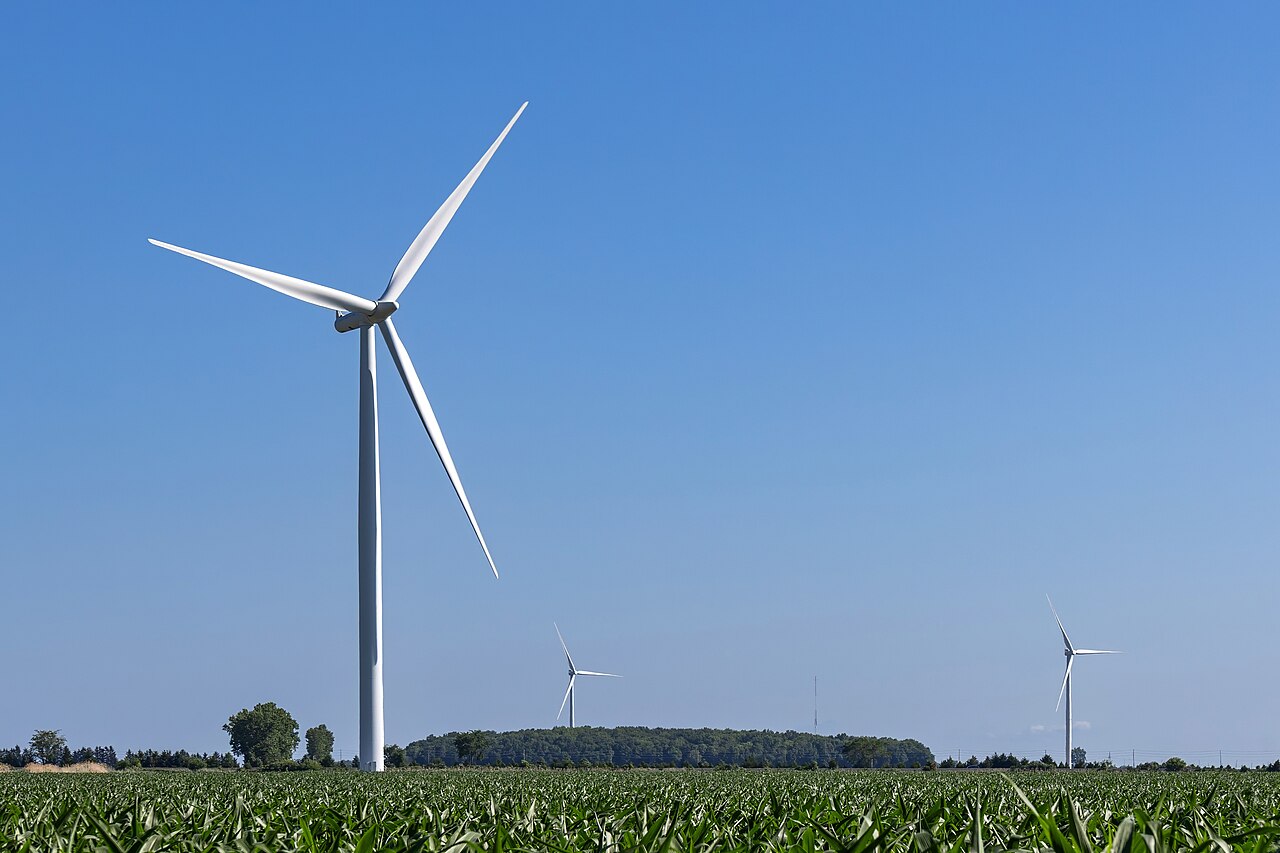
Wind turbines in Essex County, Ontario, Canada. A generator inside each nacelle converts the rotor’s mechanical input into electricity.
Crisco 1492 · CC BY-SA 4.0 (resized)