Power grid
The connected network behind everyday electricity.
Nodes and connecting lines represent a network. This is a conceptual sketch, not a geographic map.
The electricity grid is an interconnected network of lines, substations, and other equipment that links electricity producers and users. Connected resources and operators work together to keep the system operating.
A network working as a system
The grid is physical infrastructure: lines and cables, substations, transformers, switching equipment, and connections. It links many sources and users rather than giving each home a dedicated wire back to one power plant.
Operating that infrastructure also requires measurements, forecasts, communications, and people. In an interconnected AC network, power flows according to the network’s electrical properties and the pattern of injections and withdrawals.
Why it matters
A connected grid lets many resources serve many users, while sharing the task of keeping electricity available.
In the field
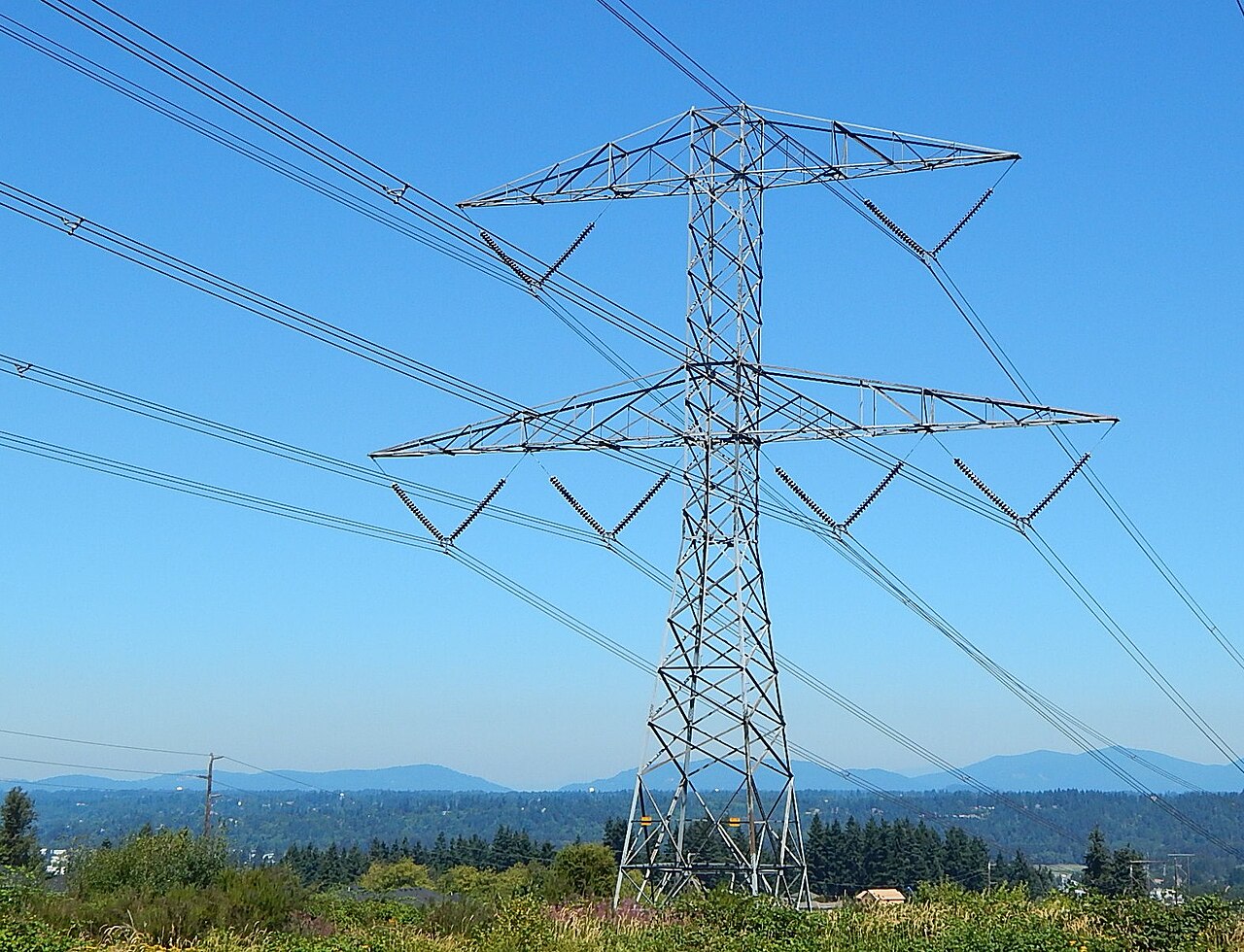
Transmission infrastructure is one visible layer of the wider grid. Local distribution systems and substations complete the connections to users.
Ron Clausen · CC0 (resized)